
Kartik / Damodar Month 2026
Sunday, October 25 – Tuesday, November 24, 2026 — daily at 7:30 pm
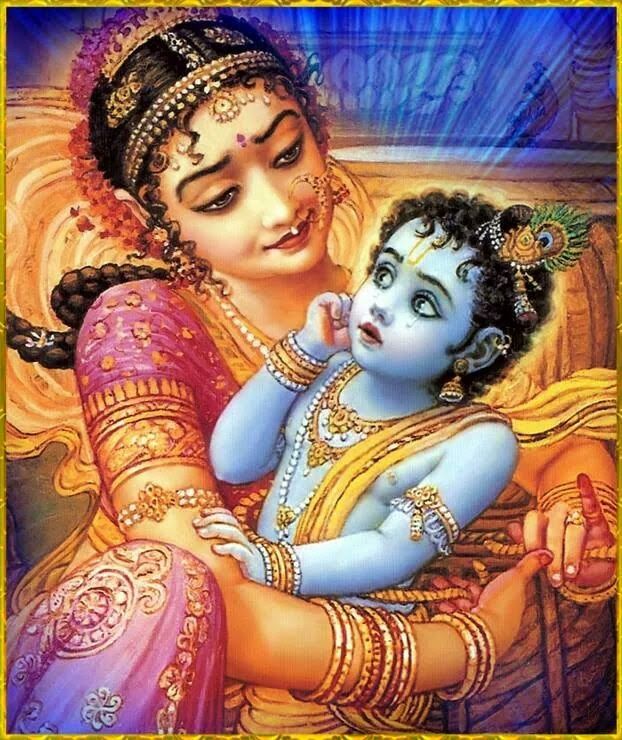
The most auspicious month of the Vaishnava year, dedicated to Lord Damodara — Krishna as the child lovingly bound by Mother Yashoda — and observed by offering Him a ghee lamp every evening.
Join us daily at 7:30 pm for Damodarashtakam and the ghee lamp offering at the temple.
Come and offer a ghee lamp to Lord Damodar — everyone is welcome.
Program Schedule
|
When |
Program |
|
Sunday, October 25 – Tuesday, November 24 |
Kartik / Damodar month |
|
Daily at 7:30 pm |
Damodarashtakam & ghee lamp offering at the temple |
|
Sunday, November 8 |
Offer a Ghee Lamp
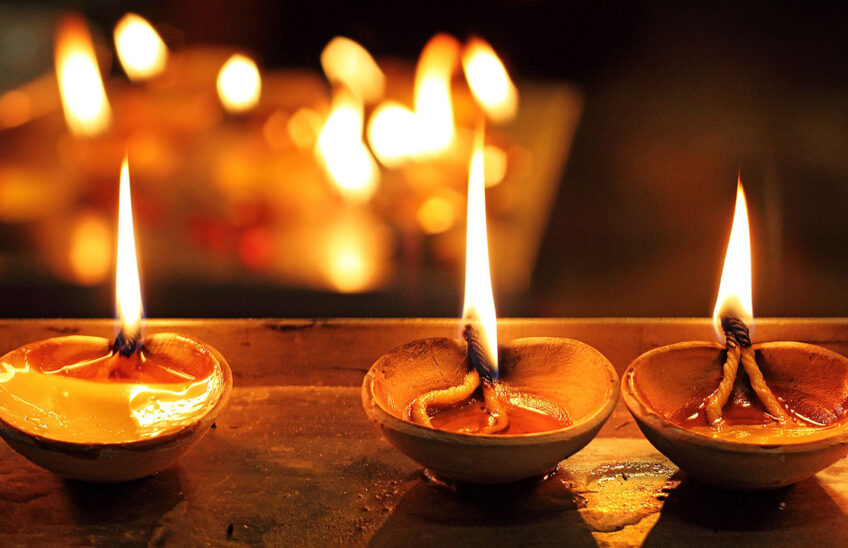
Come to the temple any evening this month and offer a ghee lamp to Lord Damodar. You can also donate a ghee diya online using the link below.
A message from the temple
Greetings from ISKCON Naperville and blessings from Sri Sri Radha Shyamasundar and Sri Sri Radha Madhava.
We would like to wish every one of you a most blissful and spiritually uplifting month of Damodara. This auspicious time can help us to advance further in our final personal objective to achieve Krishna prema, and thus be transferred to the Lord’s abode at the end of this life.
Why Krishna is called Damodara
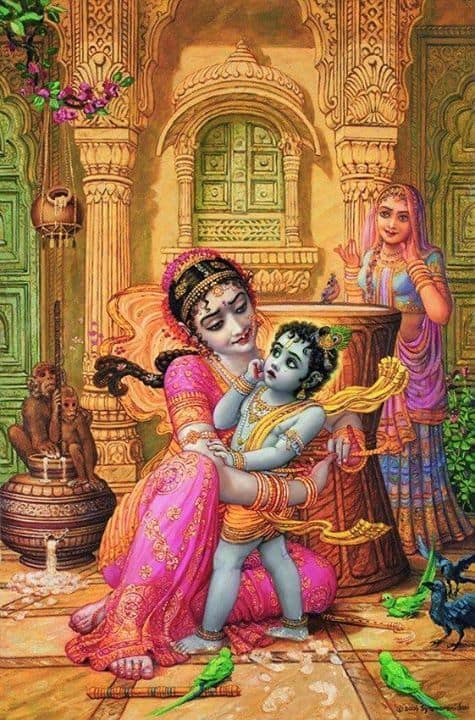
The name comes from a specific, beloved childhood story: young Krishna, caught stealing butter, was bound around the belly (udara) with a rope (dama) by His mother Yashoda — not as punishment exactly, but as an act of maternal love so pure it humbled even the Lord of the universe. Damodara means “one who was bound by the belly.” The entire month of Kartik is dedicated to remembering this pastime, and to a single daily practice built around it.
Why this month carries more weight than any other
The Padma Purana devotes an entire section — the Kartika-mahatmya — to this one month alone, a scale of textual attention almost no other period of the year receives. Kartik is also called Urja-vrata, “the vow of great strength,” because the tradition holds that whatever a devotional practice normally gives back, it gives back many times over when performed during these thirty days. But the multiplier is really a means to a single, specific end: Kartik is understood as a month when Krishna Himself is unusually pleased by even small acts of remembrance offered to Him, and a devotee who keeps the month sincerely — however modestly — is described as gaining incalculable merit, far out of proportion to the effort involved. That’s the actual reason Kartik anchors the Vaishnava calendar the way it does: not because the festivals inside it (Diwali, Govardhan Puja, Tulsi Vivah) are unusually large, but because the month itself is treated as an unusually open door to Krishna’s own pleasure and mercy.
In Vrindavan, Kartik falls right as the monsoon’s Chaturmasya vows are ending and the air turns cool and clear — traditionally remembered as the season when the Vraja-vasis’ own love for Radha and Krishna was at its most heightened, wandering the forests and riverbanks in undistracted remembrance. This is why Vrindavan parikrama pilgrimages cluster in Kartik every year, and why devotees who can’t travel there still intensify their practice at home for this one month — they’re aligning their own year with the same window the tradition treats as spiritually thinnest between this world and Krishna’s own.
The practice: a ghee lamp, every evening
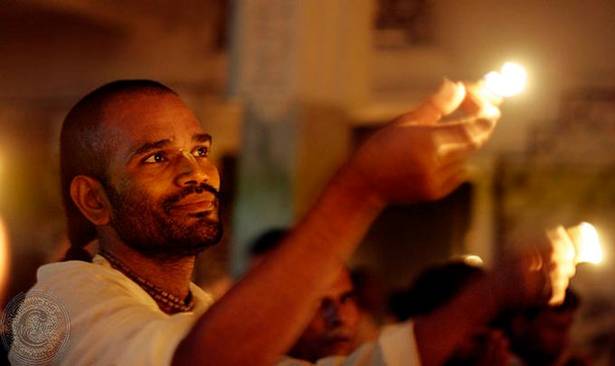
Throughout Kartik, devotees offer a small ghee lamp to Krishna each evening, often while reciting the Damodarashtakam — an eight-verse prayer composed by the sage Satyavrata Muni, glorifying this exact pastime of Yashoda binding her son. Tradition holds that sincere ghee-lamp offerings during Kartik burn away accumulated sin the way fire consumes a mountain of dry grass, and that the month’s devotional practices — however simple — yield results disproportionate to their effort.
Many households layer other small vows onto the lamp during this month too: an extra round or two of japa, reading a chapter of the Bhagavatam before bed, avoiding certain foods like urad dal, or simply sitting for a few minutes of kirtan with family instead of scrolling before sleep. None of these individually are large asks. That’s the point — Kartik isn’t a month that demands austerity most people can’t sustain; it’s built around practices small enough to actually keep every single day for thirty days.
What that actually adds up to
This is where Kartik’s value shows up in practical terms, not just doctrinal ones. Most people’s devotional life runs in bursts — a big push around a festival, then months of nothing in particular. Kartik offers the opposite: a low-effort, high-consistency structure aimed squarely at pleasing Krishna, where the “return” the tradition promises comes specifically from keeping something small every single day rather than doing one large thing once. For a family that already lights a lamp or says a prayer in passing, Kartik is an invitation to make that existing habit deliberate for one month — and, because the month is understood to multiply Krishna’s pleasure in whatever is offered to Him, that small daily consistency is treated as carrying incalculable weight.
The best of months
Kartik, or the month of Damodar, is considered the best of months and is most auspicious for spiritual advancement. In the Skanda Purana it is stated:
“As Satya-yuga is the best of yugas, as the Vedas are the best of scriptures, as Ganga is the best of rivers, so Kartik is the best of months, the most dear to Lord Sri Krishna.”
Skanda Purana
Also in the Skanda Purana it is stated:
“A person who offers a ghee lamp to Lord Krishna during Kartik burns away a collection of sins as big as Mt. Meru or Mt. Mandara, will not take birth again in this world and attains to the eternal spiritual realm where there is no suffering. Even if there are no mantras, no piety, and no purity, everything becomes perfect by such an offering.”
Skanda Purana
Coming for the first time?
You are very welcome, whatever your background or familiarity with the tradition. There is no charge to attend and no obligation to take part in anything you are not comfortable with — you are warmly welcome simply to sit, listen to the kirtan and offer a lamp with us. Modest clothing is appreciated, and shoes are removed at the entrance.
The temple is at 1505 McDowell Road, Naperville, IL 60563. If you need any help, please call (630) 608-0209.
More events & festivals
All of these are observed at the temple each year. Dates shown are for 2026.
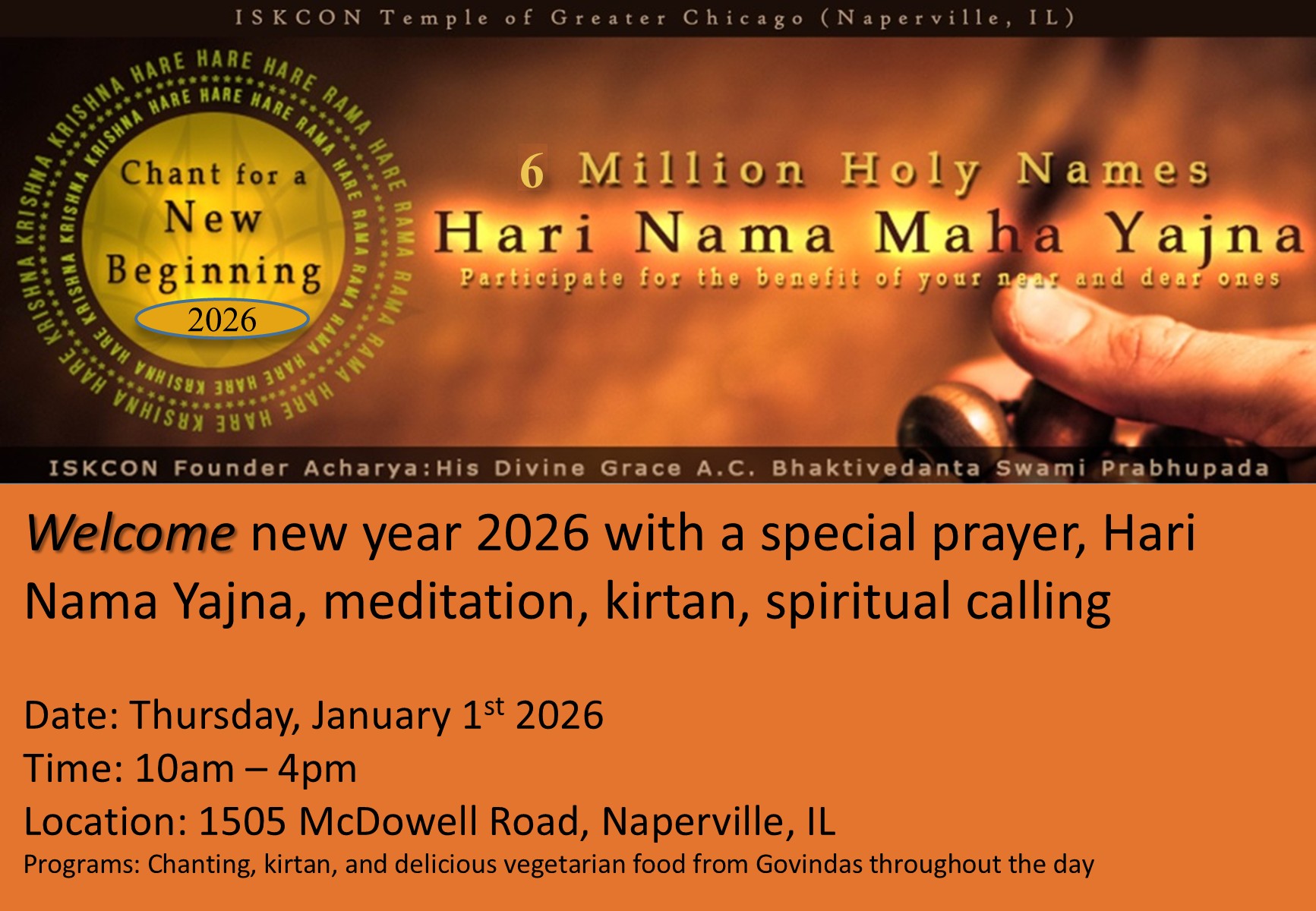 Hari Nama Maha YagnaThursday, January 1
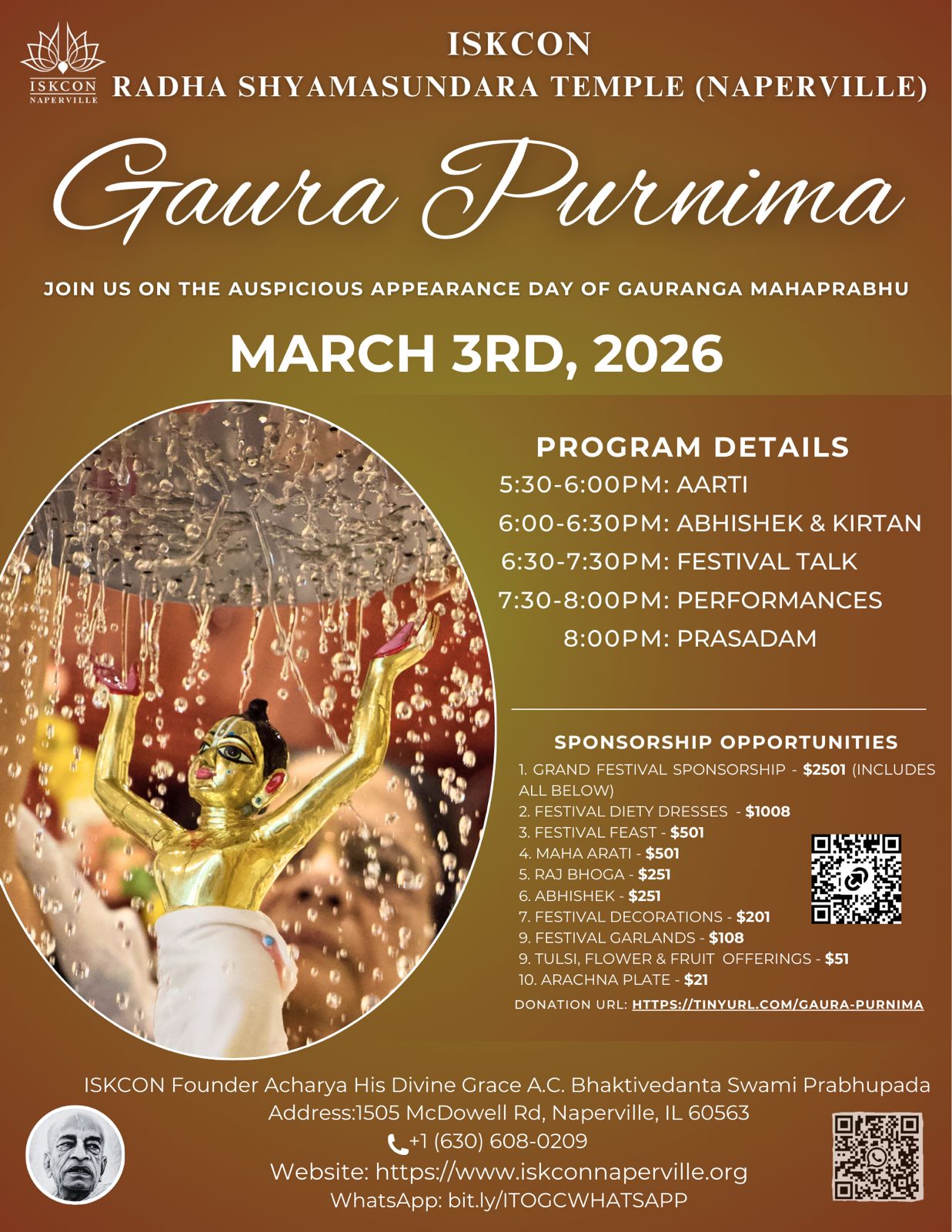 Gaura PurnimaTuesday, March 3
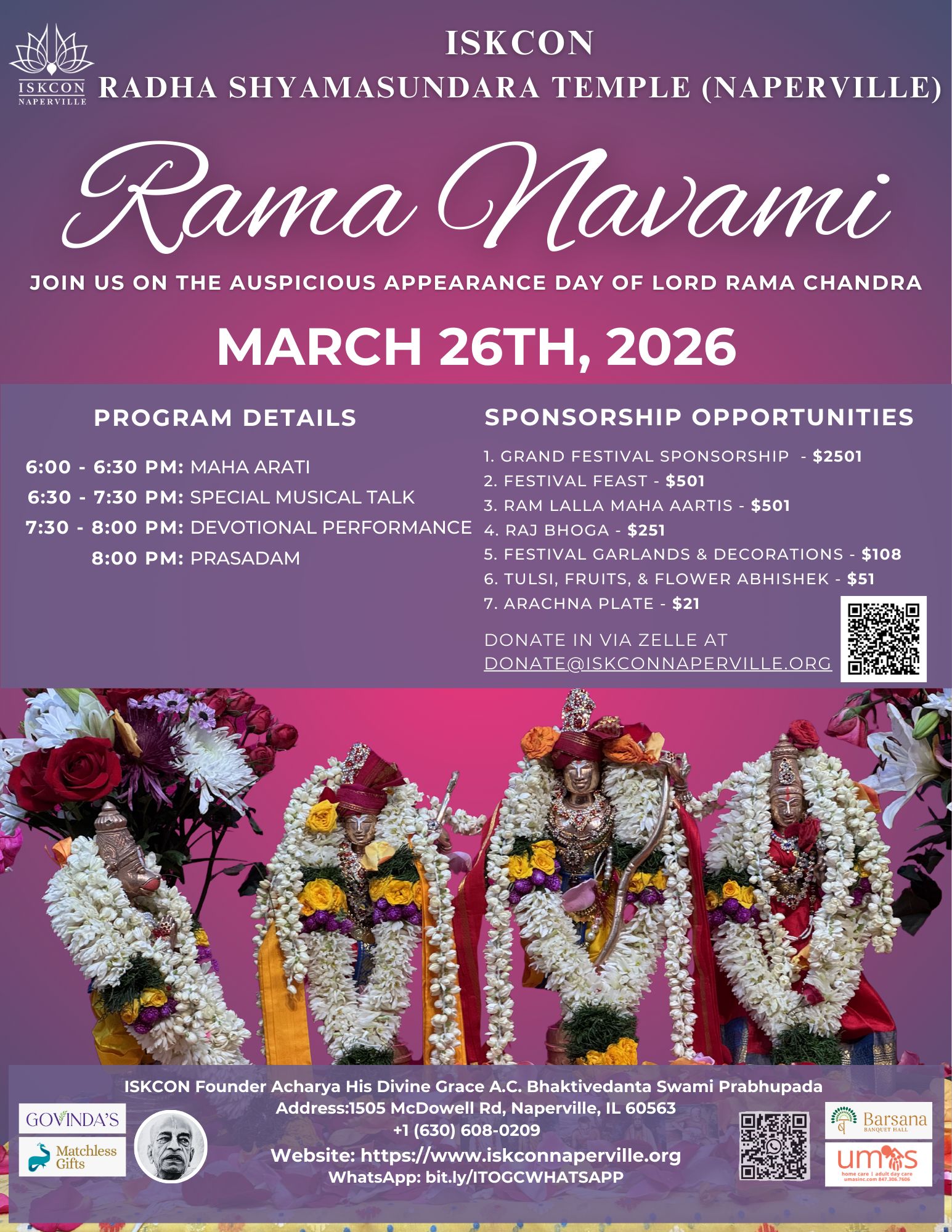 Rama NavamiThursday, March 26
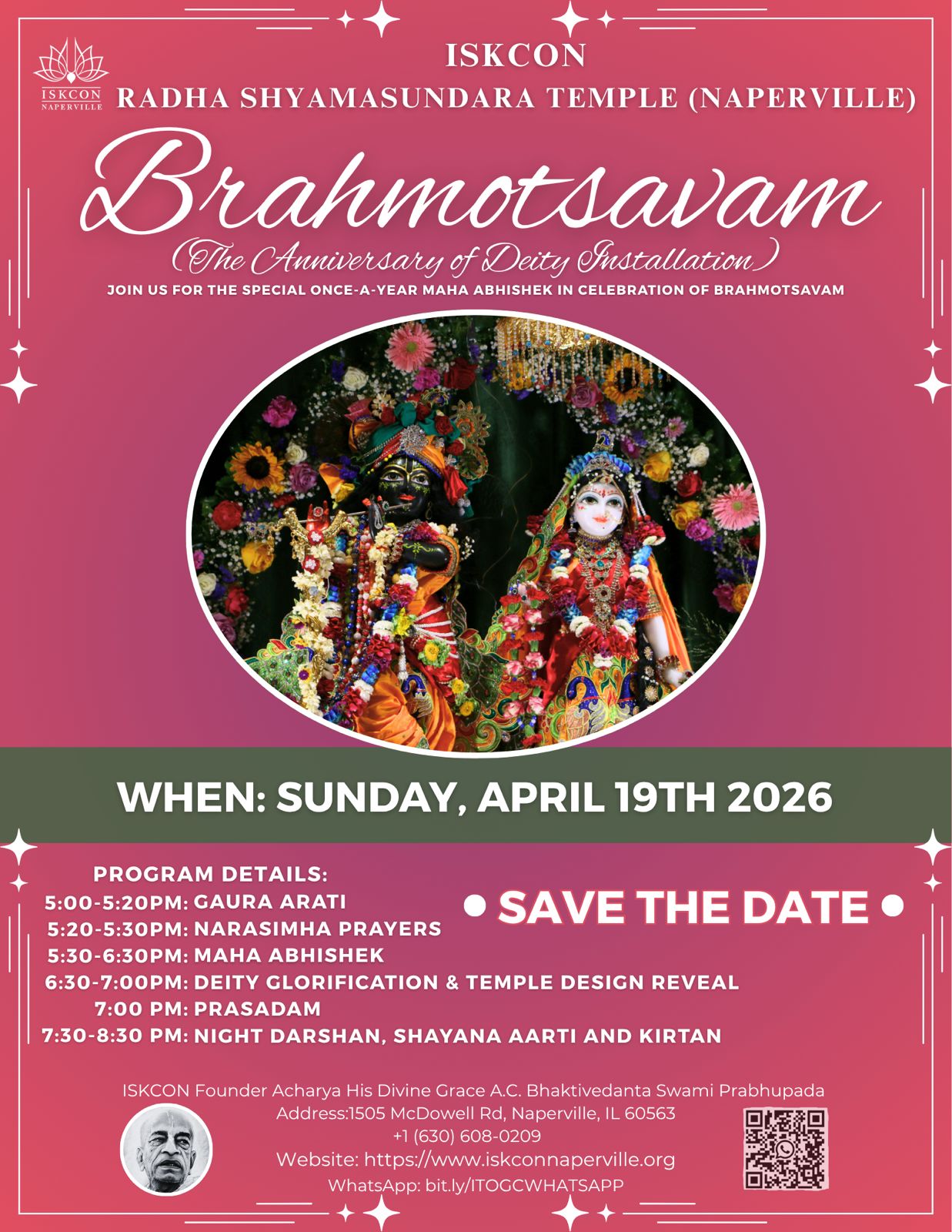 BrahmotsavaSaturday, April 19
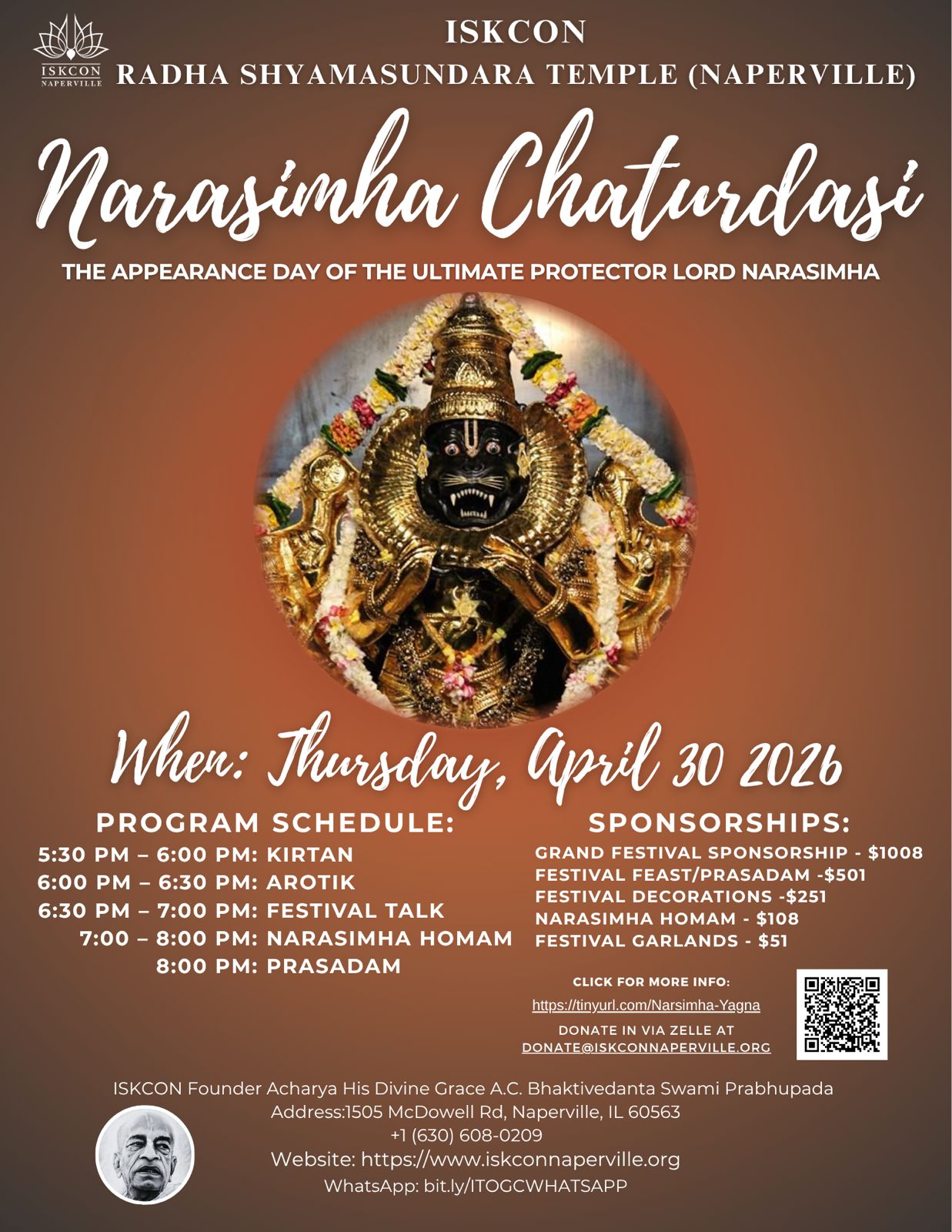 Lord Nrsimhadev's Appearance DayThursday, April 30
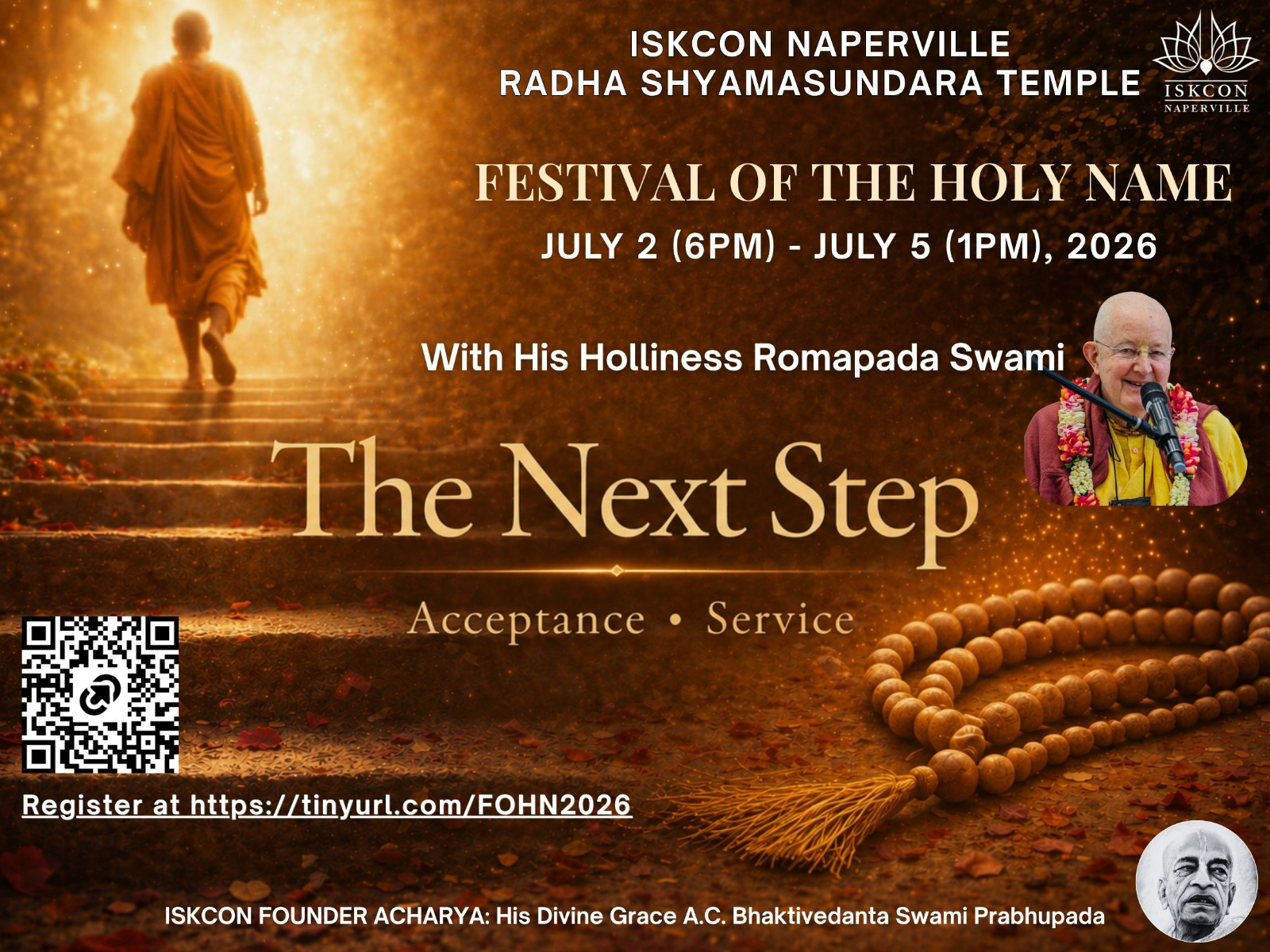 Festival of Holy NameJuly 4th weekend, 2027 · dates TBC
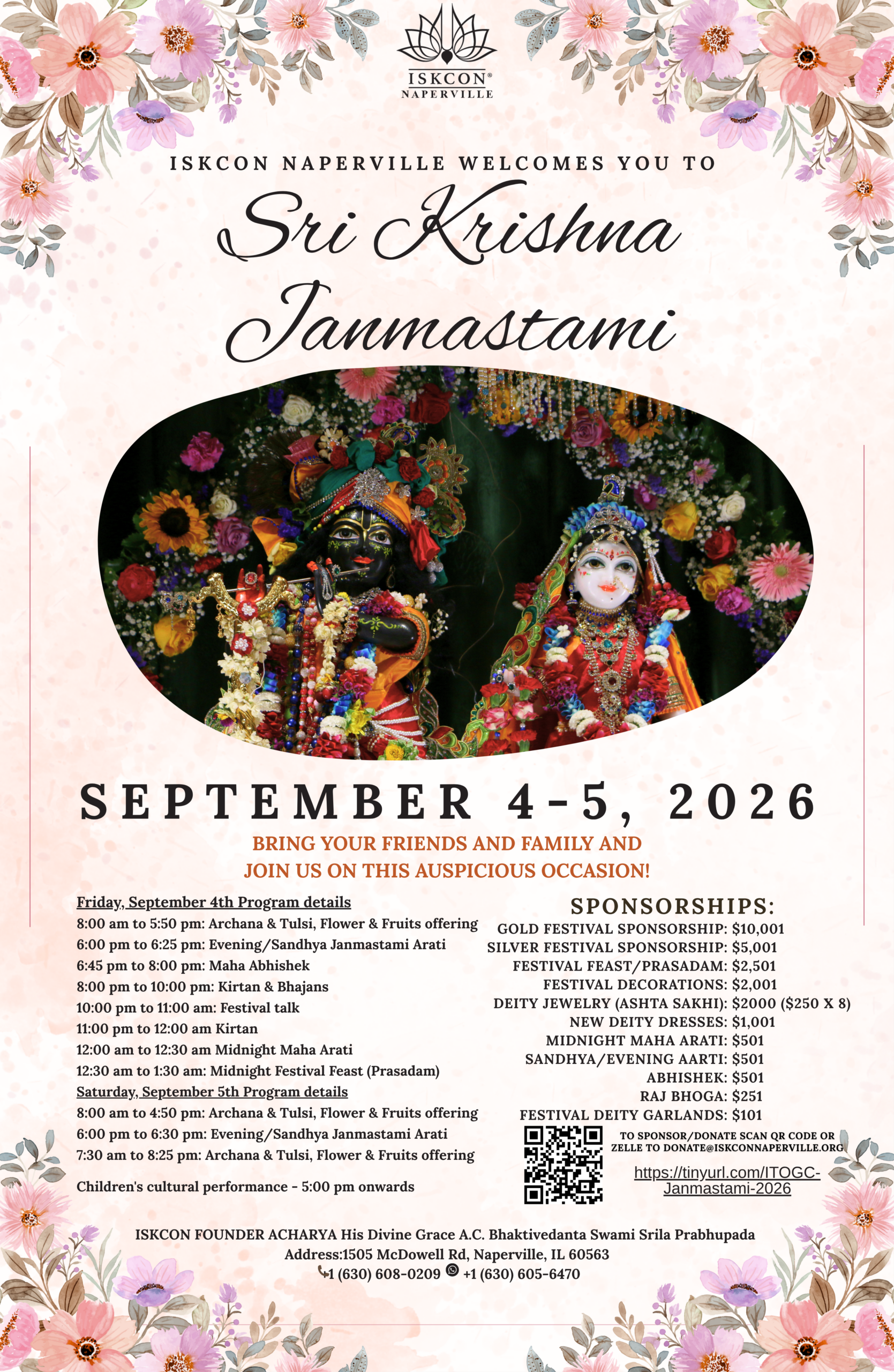 Sri Krishna JanmashtamiFriday, September 4
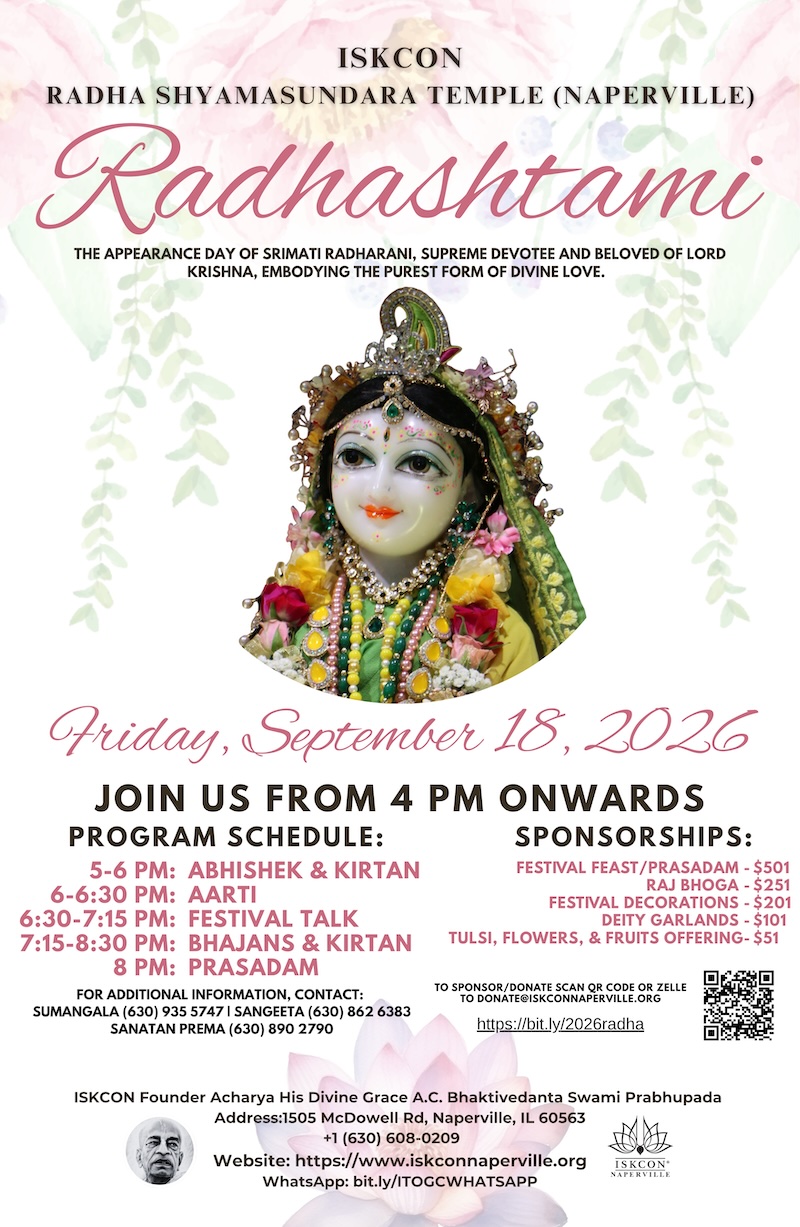 RadhashtamiFriday, September 18
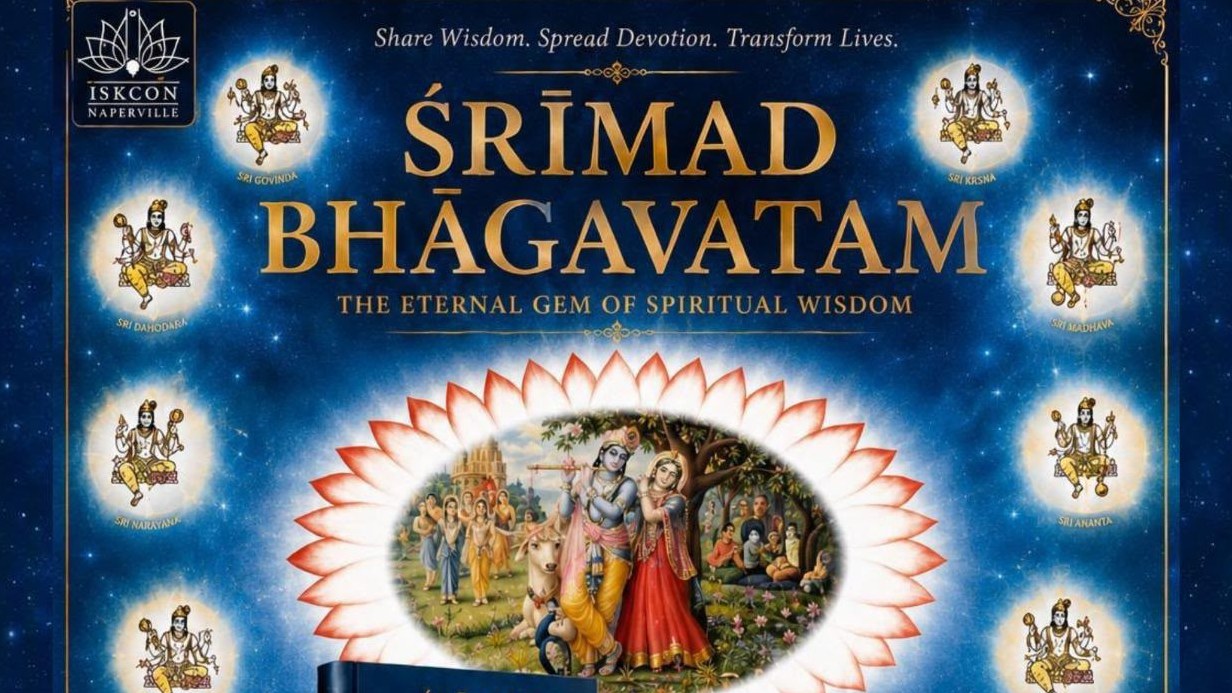 Bhadra PurnimaSaturday, September 26
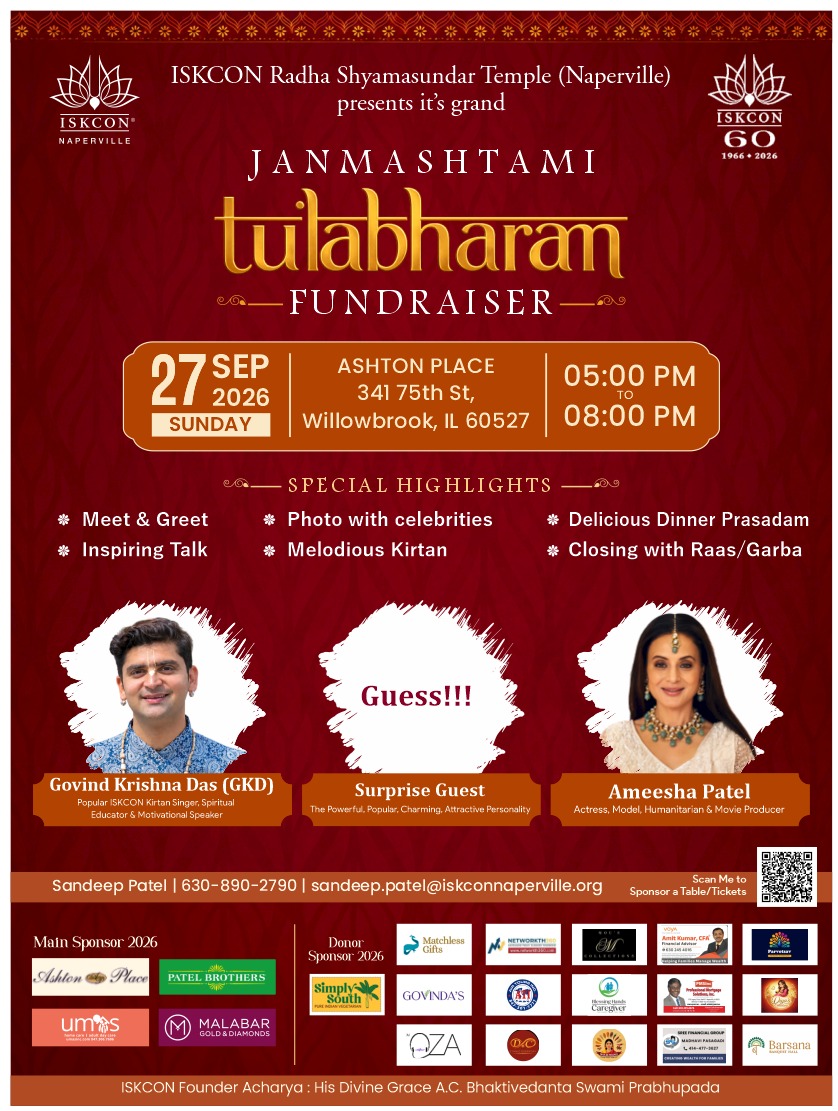 Janmashtami Tulabharam FundraiserSunday, September 27Kartik / Damodar MonthFrom Sunday, October 25
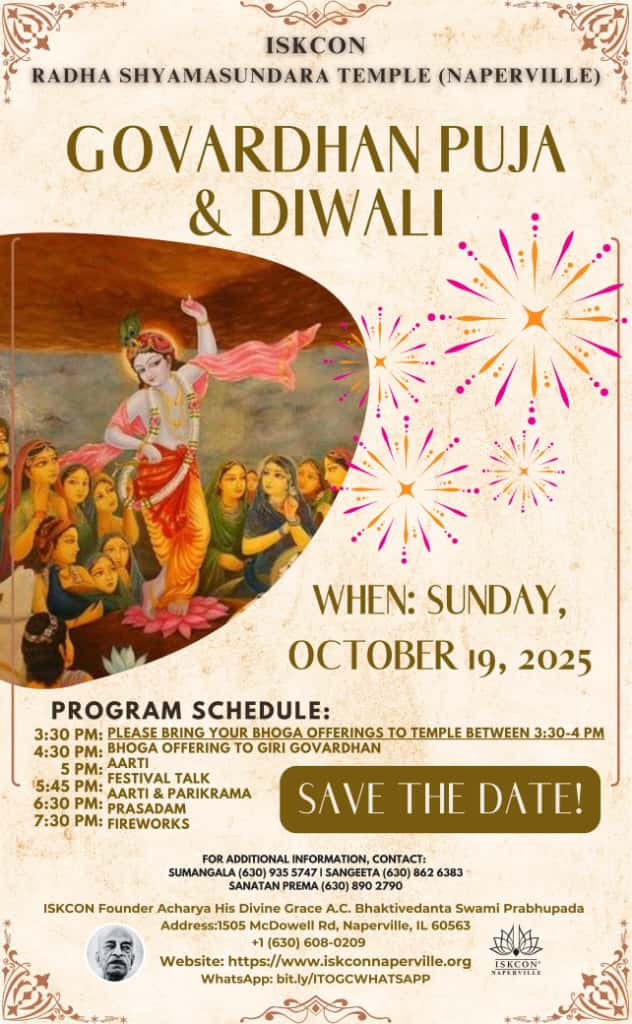 Govardhan Puja & DiwaliSunday, November 8