
Philosophy
What is Mantra Meditation?
Man means the mind. Tra means deliverance. A mantra is a special spiritual sound that carries the mind past its own noise. It asks nothing of you except your attention.
Where it begins
The mind is always busy
The mind is always busy, restless and cannot be stopped. Meditation and yoga help us rise above the mind's chatter. What we meditate on now creates our future life.
Which is why the object of meditation matters more than the effort we bring to it. Give the mind nothing and it will fill the silence by itself. Give it a sound worth holding, and it begins to settle around that sound.
man
the mind — restless, insistent, endlessly commenting
tra
deliverance — that which carries us across and beyond
So the very word mantra means, quite literally, that which delivers us from the mind.
The practice
Repetition, with the attention resting on the sound
Mantra meditation involves the repetition of a mantra — a sacred Vedic sound in Sanskrit — in prayer, meditation or incantation, and concentrating the mind on that sound vibration.
That is the whole of the technique. There is no posture to perfect and no breathing to master. The only work is to keep bringing the attention back to the sound each time it drifts, and the drifting itself is not a failure. It is simply the mind doing what minds do.
Two forms
Japa and Kirtan
There are two ways the same practice is carried. One is inward and solitary. The other fills a room.
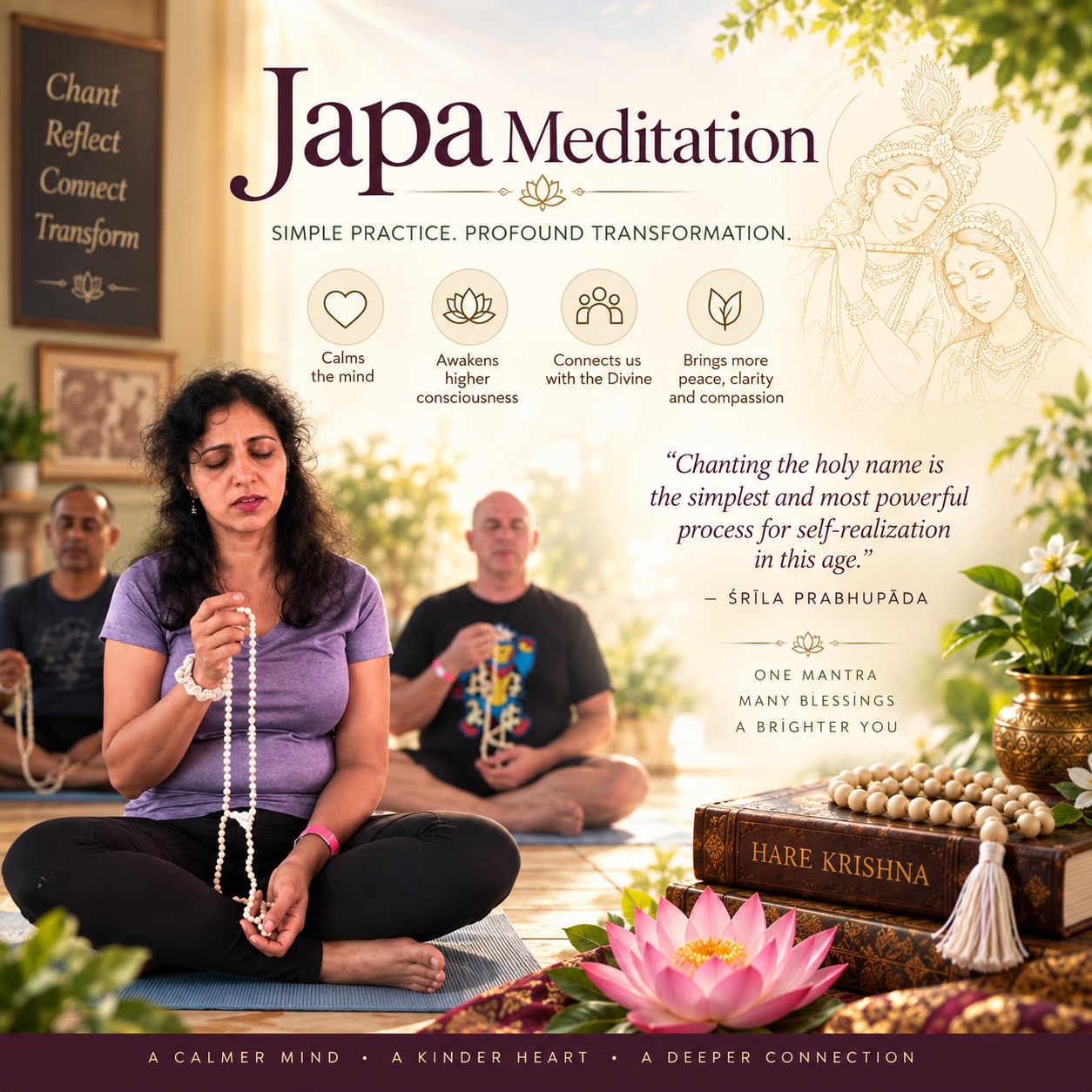
Alone
Japa
A quiet and personal meditation. One chants on a strand of prayer beads, moving through the mantra bead by bead, so that the hands keep count while the ear does the listening.
Ask anyone at the temple and they will show you how a round is counted.
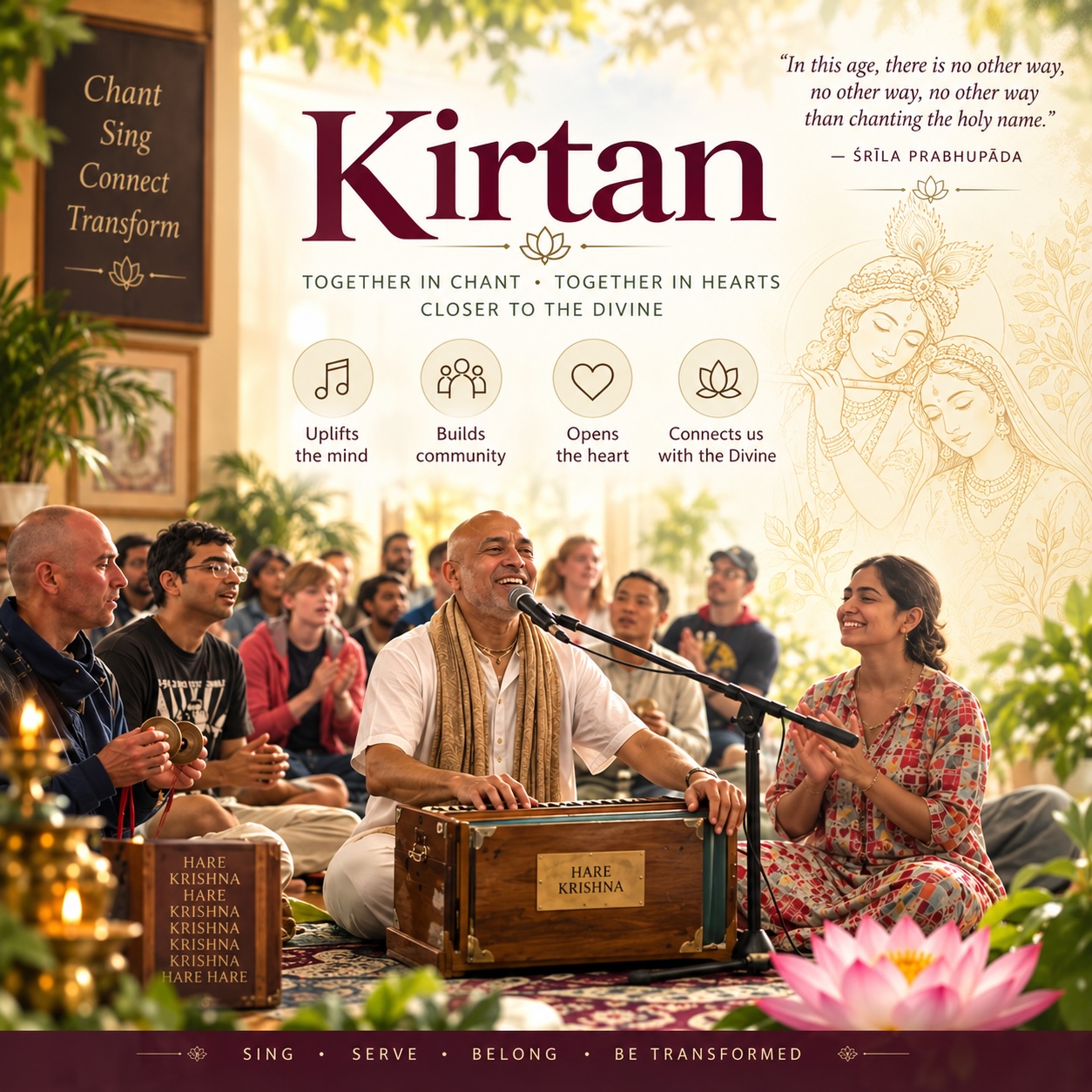
Together
Kirtan
A joyous congregational meditation on the same sound vibration, sung in a call-and-response style and carried by pulsating musical instruments. Nobody needs to be able to sing.
The Hare Krishna Maha-mantra
Hare Krishna Hare Krishna Krishna Krishna Hare Hare
Hare Rama Hare Rama Rama Rama Hare Hare
iti sodasakam namnam kali-kalmasa-nasanam
natah parataropayah sarva-vedesu drsyate
“The sixteen words of the Hare Krishna Maha-mantra are especially meant for counteracting the sins of the age of Kali. To save oneself from the contamination of this age there is no alternative but to chant the Hare Krishna Maha-mantra. After searching through all the Vedic literature, one cannot find a method of religion more sublime for this age than the chanting of Hare Krishna.”
Kali-Santarana Upanisad 5–6
There are many mantras, but of all of them this one is particularly recommended as the means of deliverance for the present age.
Listen
What japa sounds like
A short recording of the maha-mantra chanted quietly on beads, the way it is done alone. Play it once and let your attention rest on the sound rather than on the meaning.
What the words mean
Three words, repeated sixteen times
The whole mantra is built from only three words.
Hare
the beautiful energy of the Lord
Krishna
the all-attractive one
Rama
the one who gives happiness to all
These simple yet profound words help attune our consciousness to the treasure of spiritual happiness that already exists in our hearts.
Why anyone can begin
It asks for no qualification beforehand
The Maha-mantra descends from the spiritual world — golokera prema dhana harinama sankirtana.
This chanting of the Hare Krsna mantra is enacted from the spiritual platform, and thus this sound vibration surpasses all lower strata of consciousness — namely sensual, mental, and intellectual. There is no need, therefore, to understand the language of the mantra, nor is there any need for mental speculation nor any intellectual adjustment for chanting this maha-mantra. It is automatic, from the spiritual platform, and as such, anyone can take part in the chanting without any previous qualification. In a more advanced stage, of course, one is not expected to commit offenses on the grounds of spiritual understanding.
Srila Prabhupada, Founder-Acharya of ISKCON
If you want to try it today
How to begin
Sit somewhere quiet. Ten minutes is a genuine beginning.
Chant the sixteen words aloud, or softly enough that only you can hear them.
Let the ear do the work. Listen to the sound you are making rather than thinking about it.
When the mind wanders off, bring it back. That returning is the meditation.
Beads are helpful but not required, and nothing has to be understood in advance. Begin, and let the sound do what the sound does.
Chant with us
Reading about a sound only goes so far. Every week there are three easy places to hear it and join in, and no one will ask whether you know the words.
Keep reading — What is Bhakti Yoga? · Deity worship versus idol worship