
Philosophy
Deity Worship versus Idol Worship
Why the form on a Vedic altar is not an idol — and how the Supreme Person makes Himself approachable to eyes, hands and hearts like ours.
The question visitors ask
“Isn’t this idol worship?”
Step into the temple room on any morning and you will see flowers, incense, fresh clothing, cooked food and songs being offered to beautiful forms on the altar. For a visitor raised in a tradition that warns sternly against images, one question arrives immediately, and it is usually too polite to be spoken aloud.
It is a fair question, and it deserves a careful answer rather than a defensive one. The scriptures that condemn idolatry are objecting to something quite specific: worship of a form invented by human imagination, worship offered for material gain, or a created thing placed above the Creator. The Vedic tradition objects to precisely the same three things.
What happens on the altar is different in its origin, its method and its purpose. In the Gaudiya Vaishnava tradition — rooted in the Vedas, the Pancharatra Agamas and Srimad Bhagavatam — the worshipable form is called the archa-vigraha, and it is understood not as a symbol standing in for an absent God, but as God’s own arrangement for being approached.
The term itself
What an archa-vigraha is
Archā = अर्चा
That which is suitable to be worshipped and served with devotion.
Vigraha = विग्रह
Form — the personal, tangible embodiment, not an abstraction.
In Vedic understanding God is not an impersonal force, nor a distant figure beyond all reach. He is Bhagavan, the Supreme Person, complete with form, qualities, beauty and relationships. Our present senses, however, are built for matter and cannot perceive spirit. So out of compassion the Lord accepts a form composed of elements we can actually see, bathe, dress, feed and serve. He is not confined by that form any more than a voice is confined by the telephone that carries it.
And the form is not chosen casually. It is carved according to the proportions given in the shilpa-shastras, established through mantra and prana-pratishtha, and then served every day to a prescribed standard by trained pujaris. Authorisation, not artistry, is what makes it worshipable.
The analogy most often used
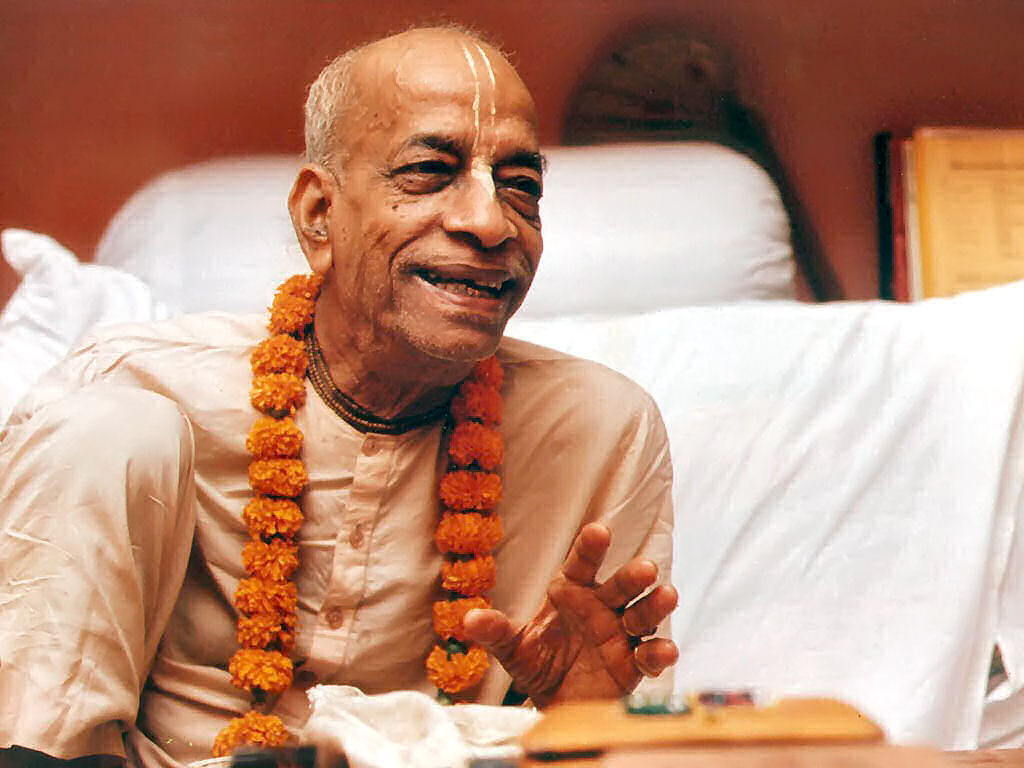
Srila Prabhupada and the two mailboxes
Srila Prabhupada (1896–1977), who brought this tradition to the West, liked to settle the question with an example from ordinary life rather than a theological argument.
A box you built yourself
Paint a wooden crate red, write POST OFFICE neatly on the side, and drop in a letter to a friend overseas. The letter will sit there until the paper yellows. Nothing is wrong with the craftsmanship. There is simply no authority behind the box and nobody collecting from it.
A box the post office installed
Walk to the corner and drop the same letter into an official mailbox. It is plain metal, bolted to the pavement, and yet the letter crosses an ocean. What makes the difference is not the metal. It is that the authority has claimed the box and serves it.
An idol, in this sense, is a form of our own devising, and whatever we offer it stays where we put it. The Deity is a form the Lord Himself has sanctioned through scripture and agreed to inhabit, so what is offered there actually reaches Him.
Side by side
Comparing the two practices
Set the two next to each other and the distinction stops being a matter of opinion. They differ at every point that matters.
| Aspect | Idol worship | Deity worship (archa-vigraha) |
|---|---|---|
| Origin | A form of human invention or artistic fancy. | Revealed in scripture, with form and proportion given in the shilpa-shastras. |
| View of matter | Dead matter treated as supreme in its own right. | Matter accepted by the Lord, and spiritualised by that acceptance. |
| Method | Whatever ritual seems appropriate at the time. | Installation by mantra and prana-pratishtha, then daily service to a fixed standard. |
| What is sought | Fortune, protection, relief, material gain. | Prema-bhakti — pure affection, asking nothing in return. |
A nineteenth-century answer
Bhaktivinoda Thakura and the photograph
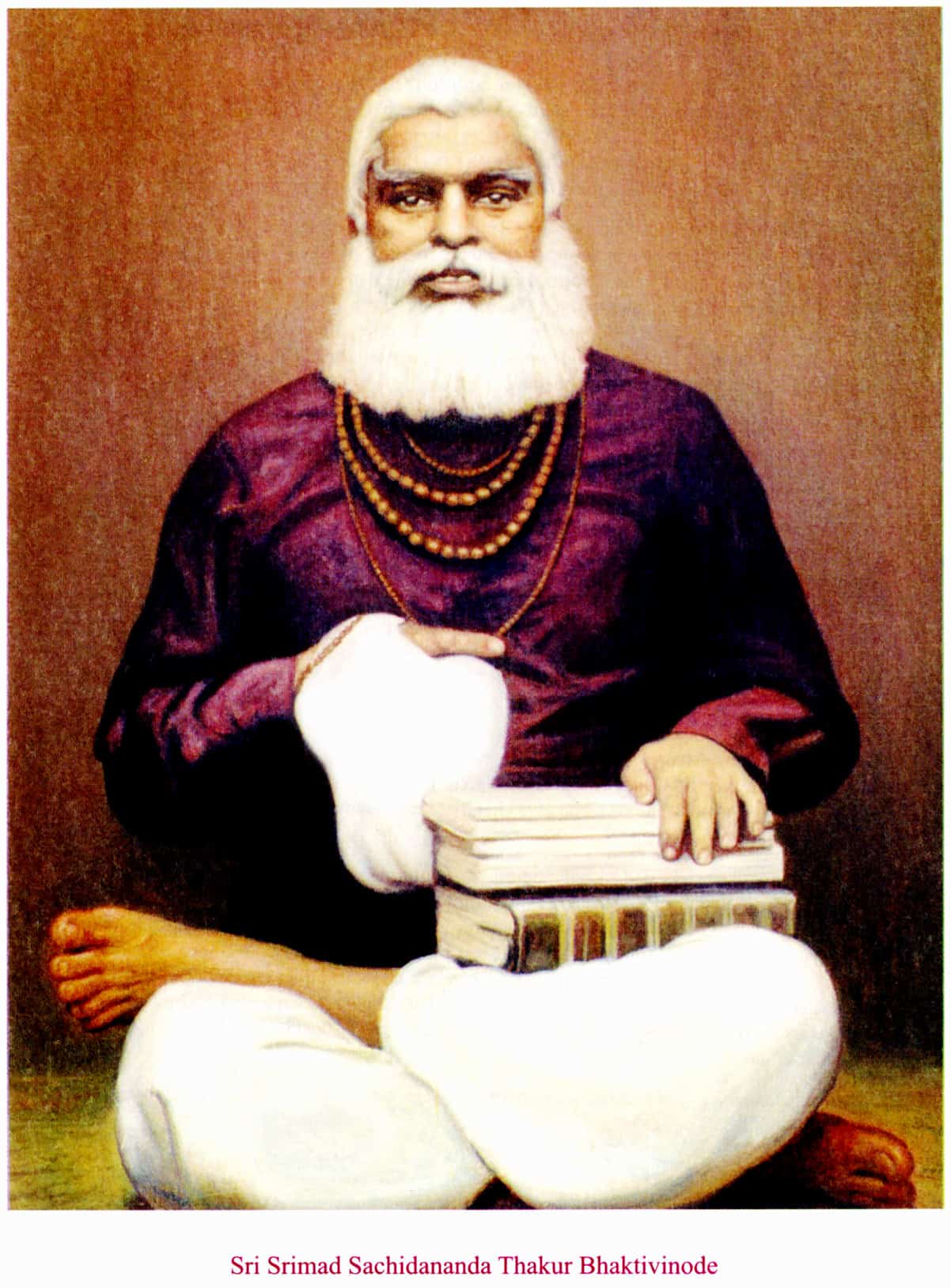
When colonial critics in Bengal dismissed image worship as primitive superstition, Srila Bhaktivinoda Thakura (1838–1914) — a district magistrate, scholar and Vaishnava acharya — answered them with an example drawn from the new technology of his day.
Look at a photograph of a child who is far from home, he said, or of a parent who has passed away. Real affection rises in the heart. Nobody is confused about what they are holding: the paper is not the person. And yet the love is genuine, and it travels to the person. The authorised form of the Lord awakens devotion in the same way and to a far greater degree, because the Lord has consented to be present there.
He also turned the objection around. To insist that God cannot appear in a form we are able to see is to impose a limit on Him. If He is all-powerful, then the power to become visible to those who love Him is surely His as well — and a God who could not do so would be the smaller idea of the two.
Srimad Bhagavatam 11.27.12
The eight materials scripture permits
Speaking to His devotee Uddhava, Krishna Himself lists the media in which His worshipable form may be established. The breadth of the list is striking — and so is the fact that there is a list at all.
Stone
śailī — marble, granite
Wood
dāru-mayī — neem, sandalwood
Metal
lauhī — brass, panchaloha
Earth
lepyā — clay, sacred earth
Paint
lekhyā — painted images
Sand
saikatī — formed at the riverbank
Mind
mano-mayī — held in meditation
Jewels
maṇi-mayī — gems, shalagrama-shila
The medium may be humble or precious, permanent or momentary. What is never left to preference is the authority behind it.
Why it is practical, not theoretical
Every sense is given something to do
Bhakti is not only an inner state of mind. Deity worship hands the body and the senses — the same senses that spend most of the day chasing everything else — a direct part in the relationship.
Seeing
Darshan of the dressed and decorated form, different on every festival day.
Smelling
Incense, tulasi leaves and fresh flower garlands offered at the altar.
Tasting
Prasadam — food cooked with care, offered first, and then shared with everyone.
Hearing
Kirtan, bells and conch, and the mantras chanted during arati.
Touching
Threading garlands, cleaning the altar, carrying water, polishing the utensils.
Loving
The affection that grows out of daily service, which the tradition calls prema.
In short
What it comes down to
- Authority, not imagination. An idol is something we thought of. A Deity is a descent the Lord has prescribed, installed and accepted through a scriptural process.
- God is a person. Deity worship rests on the conviction that the Supreme has an eternal form, and can be approached, served and loved rather than only contemplated.
- Matter can be spiritualised. Touched by mantra and devotion, ordinary elements become a window rather than an obstacle — which is the whole of the tradition’s answer to the charge of idolatry.
An open invitation
Come and see for yourself
Philosophy can settle the question intellectually. Standing before the altar during arati answers it in a different register altogether. Everyone is welcome here, whatever you believe and however much or little you know about us.
Plan a visitSunday Feast program
What is Bhakti Yoga?What is Mantra Meditation?Why is Vrindavan Special?